Showing posts with label western cape. Show all posts

Monday, January 14, 2013

The Harkerville Market - Plettenberg Bay


The Harkerville Market
Guest blog: Janet Middleton
Harkerville Market - Plett
Organic Vegetables - Plettenberg Bay


The Harkerville Market is a delightful organic food and craft market located halfway between Plettenberg Bay and Knysna, and less than 5 minutes from Fynbos Ridge. 

This Saturday market has been going for over 10 years and is very popular with both visitors and locals alike. The fresh produce and speciality foods are the perfect compliment to the unique arts and crafts on offer.

Harkerville Market Breads


Harkerville Market Breads
Before you buy breakfast, have a starter of Ile de Pain
bread and homemade  strawberry jam!


The food market surrounds a large field, filled with benches, umbrellas and large trees encouraging visitors to stay a while and enjoy their fresh purchases. A Market specialty is the “Bush Breakfast” at the Bundu Breakfast stall, which is served al fresco, but with all the fresh bread, pastries, select cheeses and cured meats on offer at the various stalls one might easily put together a sublime continental picnic breakfast to enjoy on the spot!

Harkerville Market Cheeses
Paul Page - The Cheeseman 

The fresh produce is often seasonal with pomegranates, strawberries, grapes and cherries all fresh from the fields. Staples of the market fresh produce include spinach, herbs, lettuce and fresh cut flowers – all organic. Over and above the fresh produce, breads, cheeses, meats and flowers, one can stock up on preserves and pickles (which make the most wonderful gifts), sauces and pestos, and sample a variety of specialities honey, fudge, chocolate, dried fruit and nuts. Every visit offers some new delight or delicacy!

Harkerville Market Flowers

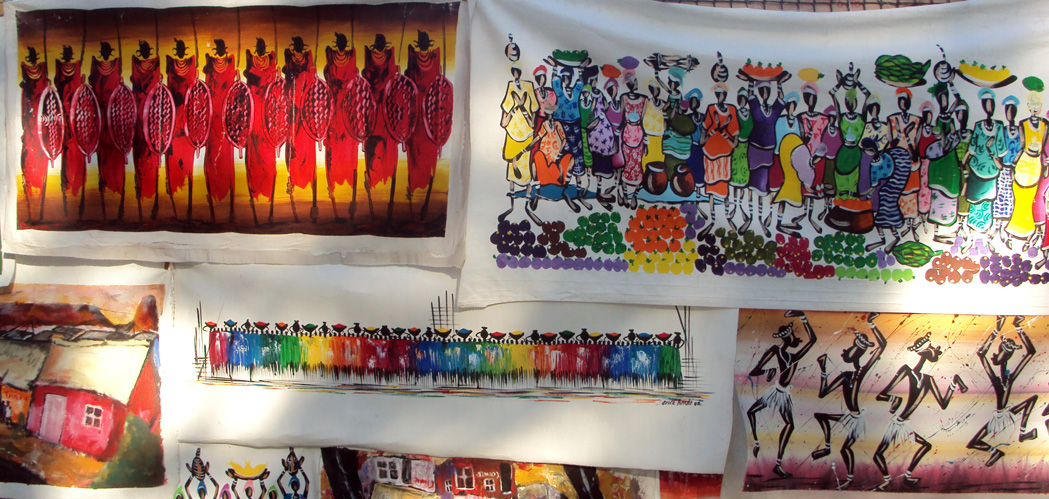
The crafters market is unique and varied and includes woodwork, beadwork, African artwork, clothing, jewellery, needlework and all sorts of useful bits and bobs. All locally produced and very well priced – this is one of the best spots that I know of to shop for Christmas and birthday presents and to stock up on gifts! A true South African “flea market”!

Harkerville Market Beach
Well known artist Gordon Legg has a popular stall at the Harkerville Market
If you happen to have a Saturday on the Garden Route, The Saturday Market at Harkerville should be an essential stop for a spot of morning shopping or browsing or a bite to eat. The market even has a wonderful children’s playground – so there really is something for everyone!

Visit their website for a full list of stockists: www.harkervillemarket.co.za


Harkerville Market


Harkerville MarketHarkerville Market Bread


Harkerville Market Stalls
Harkerville Market Woodwork


Harkerville Market Fish


Harkerville Market Art


Harkerville Market Art


Tuesday, December 4, 2012

Exploring Knysna & The Knysna Heads


by Janet Middleton


The Knysna Heads
Photo: Digital Photo Library

A highly popular day trip for visitors to Plettenberg Bay is the little town of Knysna. Surrounding a large, serene estuary and lagoon, Knysna is only 35km from Plettenberg Bay and 20km from Fynbos Ridge. Driving from Plettenberg Bay into Knysna, you will find yourself in a different world.

The Knysna Heads
Where Plettenberg Bay is known for sandy beaches and gentle waves, Knysna is famous for the beautiful lagoon and “Knysna Heads”- two dramatic headlands between which the estuary joins the sea. 

The Knysna Heads
Photo: Liz Phillips
Knysna is certainly food for the imagination and is surrounded by indigenous forest. This charming town lends itself to tales of “pirate’s coves” and undiscovered territory. One can easily imagine the first sailors navigating The Heads into the lagoon. Not much has changed.

Originally used as a port for timber transportation, Knysna is now a popular holiday destination for South Africans and international visitors. The landscape is dominated by The Heads, which are popular for nature walks and hikes. The East Head is also a residential area and is easily accessed from town. The West Head is a privately-owned nature reserve, Featherbed and is only accessible by ferry. Walks are conducted by knowledgeable, specialist guides and are suitable for all ages and fitness levels.

The Knysna HeadsThere are many other excellent hiking opportunities into the Knysna forests, but a visit to the Knysna Heads is an absolute must-see.

The Knysna Heads


The Knysna Heads
Take the ferry across the lagoon to the Featherbed Reserve
The Knysna Heads
Photo:  Amy Phillips

Thursday, November 1, 2012

Scuba Diving in Plettenberg Bay

Dive into Plett (and Knysna!)

Text by Janet Middleton

Diving in South Africa
Picture: Oceans Africa Diving
Although the Garden Route is not widely known for scuba diving and snorkelling, one might be very surprised to know that the waters of the Southern Cape Coast are some of the most diverse and colourful in the world.

Every manner of soft coral, anemone and sponge adorn reefs teeming with marine life including rays, reef fish, elusive nudibranchs and the endemic shyshark species. Scuba diving in the area can be quite varied to include shallow shore dives on colourful reefs, ideal for macro photography to deeper sites offering spectacular topography, game fish and sharks.

Gorgonian Fan Plettenberg Bay
Gorgonian Fan Garden Plettenberg Bay        Picture:  Prodive
Scuba Diving Plettenberg Bay
Ready to go. Plettenberg Bay
Plettenberg Bay is known for an abundance of marine life and a boat trip to the dive site is often interrupted with sightings of whales, dolphins, marine birds and seals. The Robberg Peninsula is home to a colony of Cape Fur Seals and no diver should pass up the opportunity to do a dive or snorkel with these graceful, playful marine mammals. It is known as one of the highlights of visiting Plettenberg Bay.

Cape Fur Seal Plett
Inquisitive Cape Fur Seal off Robberg.  Plettenberg Bay.
Another must-see dive site is the Paquita Wreck, just inside the Knysna Heads. Legend tells that she ran ashore in 1903 under suspicious circumstances. Knysna diving is known for the elusive Knysna Seahorse and the Paquita is one site where divers may have an opportunity to spot them. The Knysna Heads are known for very strong currents and the wreck can only be dived on the turn of the tide, but this all adds to the adventure of diving here.

Diving in Knysna
Knysna Heads. Site of the Paquita wreck.

Sharks Plettenberg Bay
Hello!  Plettenberg Bay.  Photo: Prodive
The Garden Route is a treasure trove of dive sites, varied and appealing. Photographers will love the colourful invertebrate life, adventure seekers can dive with seals, sharks and rays and the area has a rich marine history of shipwrecks.
  • Have you ever dived or snorkelled in the area? 
  • Do you have any favourite spots that you would like to share?


Contact:             Prodive Dive Centre Beacon Isle Plettenberg Bay
More info:           Dive South Africa 


Forests of gorgonian fans are littered with basket stars and huge orange wall sponges flow across the contours. Anemone gardens abound and jewel anemones sparkle from the darker recesses. Cup corals and feather stars, brittle stars and nudibranch, sea hares and  pipefish, horsefish, shy sharks and occasionally larger sharks complete the scene. 
This text and photo: Oceans Africa Diving


Scuba Diving in Plettenberg Bay


Thursday, September 27, 2012

The Pros and Cons of Fracking

The Pros and Cons of Fracking

Guest blog by Nick van der Leek, who provides an update on the latest findings from South Africa’s top scientists
Photos: Nick van der Leek

On the 17th of May, Dr Danie Vermeulen addressed a large audience at the Free State University campus. His lecture was titled The Shale Gas Story in the Karoo: both sides of the coin. Vermeulen, director of the Institute for Groundwater Studies (IGS) at the UFS started his lecture with a portentous comment. “It’s customary , by way of introduction, to begin a speech with a joke,” he said. “But there are no jokes when it comes to fracking.”


South Africans want simple, conclusive answers to a number of serious questions: is fracking going to be a game changer for this country? Is it safe? Are the risks proportionate to the rewards? Vermeulen and Professor Gerrit van Tonder do provide some surprising and compelling insights beyond what we already know. Given the state of the global economy, and the present flux in energy markets, the stakes are extraordinarily high.


Photos: Nick van der Leek

The Pros of Fracking

  1. South Africa appears to have some of the world’s largest resources of shale gas, in fact South Africa has the fifth largest reserves worldwide. (China, the USA, Argentina and Mexico occupy the top four spots).
  2. Based on Vermeulen and van Tonder’s calculations, fracking in South Africa looks to be highly profitable. Based on average gas prices in the US at $4 per million BTU’s, a 5000 hectare Karoo farm’s shale reserves are worth R400 million.
  3. Vermuelen and Van Tonder see shale gas reserves of around 485 trillion cubic feet (TCF) in their ‘high case scenario’. China and the USA have roughly double that amount – each.
  4. Talk of shale gas reserves is more than just talk. During Soekor’s exploratory drilling in 1968 they hit paydirt at Cranemere (the CR/168 well). Flow peaked at 16 million standard cubic feet per day; the well took two weeks to cap.
  5. Vermeulen cites breakthroughs in modern technology, which has seen modern fracking methods that are less invasive thanks to sub-surface horizontal drilling techniques. These innovations have negated the need for multiple fracking turrets, which means diminished defacing of the countryside.
  6. Fracking is relatively cheap in terms of overheads. An individual fracking well costs around $25 million, while a Gulf of Mexico well costs $100 million.
  7. A final compelling slide provided by Vermeulen demonstrates that the ratio of water volumes used per BTU (an energy unit) produced is lowest for fracking. In other words, for a given energy return, less water is required for fracking than for the extraction of every other energy resource (including coal, nuclear, oil, and the worst performer on this score – bio-fuels).

The Cons of Fracking

For the cons I will also defer to the imminent American writer and Peak Oil commentator, James Kunstler, who has more than a few cogent arguments against fracking.
  1. How long will shale gas reserves last?
  2. Kunstler writes: “Over a 50 year period, all the shale gas drilling of the Marcellus fields in New York State will produce the equivalent of three years US consumption at 2008 levels.” Vermeulen estimates that South Africa’s gas reserves ought to last 160 years. At this point, it’s anyone’s guess.
  3. It’s no small investment
  4. According to Kunstler: “It takes three years average to prepare a drilling ‘pad’ and the up to 12 wells on it, working 24/7 in rural areas with significant noise and electric lighting.” Vermeuelen and van Tonder agree that even if the moratorium is lifted today, production of South Africa’s shale gas would take about a decade to implement. The number of heavy truck loads required to service a single well is also significant (around 2000, or equivalent to the daily truck traffic through Beaufort West on the N1).
  5. Shale gas won’t bring down the price of energy
  6. “A price of $8 per unit is required to make shale gas fracking economically viable in theory even for a short time. Gas is currently around $4. Expect to pay at least twice as much for gas.”
  7. Toxic cocktail
  8. “The fracking fluid is a secret proprietary cocktail formula amounting to 5 percent of the liquid injected into the earth. It’s composed of: sand; a jelling agent to suspend the sand because water is not ‘thick’ enough; biocides to kill bacteria that thrive in jelling agent; ‘breakers’ to thin out jell-thickened water after fracking to get the fluid out of the way of released gas and improve ‘flowback’ fluid-loss additives to decrease ‘leak-off’ of fracking fluid into rock; anti-corrosives to protect metal in wells; and friction reducers to promote high pressures and high flow rates. Of the 5.5 million gallons of fluid injected into each well, 27,500 gallons (21 million litres) is the chemical cocktail.” In addition, the fracking fluid cannot be reused. “You have to mix new cocktail fluid,” Kunstler adds, “for each injection.” An additional concern is the radioactive material in ‘flowback’ which adds another dimension to soil and water contamination.
  9. Well integrity
  10. Whilst well integrity has come a long way, it remains the nexus for a number of crucial concerns. Kunstler references “concrete casings of drill holes [that] sometimes crack and leak at any depth.” And van Tonder accepts that “faulty well casings [are] is going to be a big problem. Cement will deteriorate with time and all the boreholes must be viewed as preferred pathways. Just imagine if the companies are going to drill 500 000 boreholes and, as you know, the application area is in total 220 million square kilometres (9 million hectares for Shell alone). The total area is thus 22 million hectares and you can divide this number by 260 and multiply by 10 to get the number of boreholes. Scary indeed.”
  11. Van Tonder raises the question:
  12. of the formations underlying the Karoo, and their idiosyncratic permeability. Could deep fracking chemicals mix with the Karoo’s fresh shallow aquifers? “We know,” he says, “that there is an upward gradient of groundwater flow in the Karoo (the 16 hot water springs that originate in the Karoo formations is a proof of this). Even with sealed wells, drilling nevertheless penetrates drinking water layers to get down to the shale gas. Kunstler contends that the risk of pumping fracking fluid through these vital fresh water arteries is just too great a risk. “Little is known,” Kunstler contends, “about the migration of fracking fluids underground.” Professor Gerrit van Tonder echoes these concerns. “The problem is what happens after you put in the chemicals?”
  13. Rapid depletion.
  14. Kunstler also raises a point that no one else does.. “Shale gas fracking is arguably uneconomical. It requires huge numbers of rigs, generally 8 wells per ‘pad’ meaning very high capital investments. The wells produce nicely for a year, average, and then deplete very steeply - meaning you get a lot of money up front and very soon all that capital investment is a wash.”
Photos: Nick van der Leek
Professor van Tonder’s concerns have merit. “In the Karoo there are dolerite dykes and sills which form for sure preferred pathways. If the zone along such a dolerite dyke is well developed, the K permeability can be 10 to 1000 times larger which of course will give you a travel time of 6 years. So, yes, in some places the pollutants will reach the fresh water aquifer in a very short time. But lucky for Shell, it is very hard to exactly monitor these preferred pathways positions. In fact,” he concludes, “it may be impossible.”

Perhaps the answer isn’t black or white. Maybe it’s not about weighing up the pros and cons, maybe there needs to be a realisation that fracking, due to our chronic energy demands, ought to be added (as a matter of necessity) to our energy supply. Whilst it is tempting to believe fracking may be a game changer, this seems unlikely. Even so, we don’t seem to be in a position to do without the energy endowments that come from fracking. In time, research may indicate, as with nuclear energy, an acceptable level of risk based on a modest (but realistic) energy reward. In the end, fracking will probably form part of a new portfolio of energy production that needs to be ramped up if we’d like the lights to stay on in the foreseeable future.

Nick van der Leek http://www.nickvanderleek.com/


Photos: Nick van der Leek